Hedge Trimming Willesden: Recycling and Sustainability
 Hedge Trimming Willesden blends professional hedge maintenance with a clear commitment to eco-friendly waste disposal and a sustainable rubbish gardening area across the local area. Our Willesden hedge trimming and garden clearance teams prioritise reuse and recycling at every stage of work, ensuring that green waste is treated as a resource rather than refuse. We aim to protect local biodiversity while providing tidy, healthy hedgerows for homes and community spaces.
Our sustainability commitments for hedge care
Every Willesden hedge maintenance job follows a sustainability-first approach. We separate materials on-site where practical, diverting wood, branches and brash into reuse streams or composting. By designing workflows that mirror the borough’s approach to waste separation — garden waste apart from mixed recycling and food waste — we reduce contamination and improve recycling outcomes. Strong operational standards mean less landfill, lower carbon emissions and more local benefit.
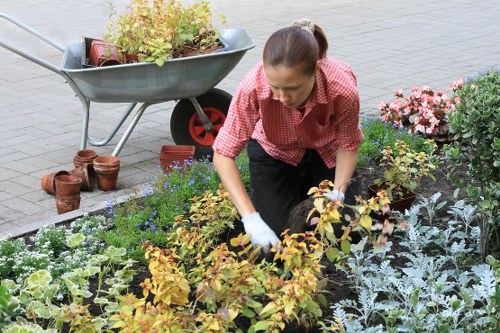 We have set a clear recycling percentage target for our green waste activities: a staged goal of achieving a 70% recycling and reuse rate for hedge and garden waste by 2028. This target covers reuse (mulch and woodchip), composting for soil improvement, and material transfer to authorised local facilities. Our target is realistic and measurable, and we publish progress internally to guide continuous improvement.
How green waste flows from your garden to sustainable outlets
We use a chain-of-custody approach: careful on-site sorting, temporary containment in compostable or reusable sacks, and transfer to licensed handling points. Where possible, wood sections large enough for reuse are offered to local community projects; smaller branches become mulch or incoming feedstock for municipal composting. Below are typical local processing points we work with and the recycling activities they support:
- Local transfer stations and civic amenity points – for larger volumes and mixed green refuse.
- Brent-area composting sites – for matured garden waste turned into soil improver.
- Recycling centres that accept segregated timber for chipping into mulch and biomass feedstock.
 We prioritise partnerships with reputable local transfer stations and civic facilities, and we coordinate collections to match opening times and acceptance criteria. Our operational model recognises the borough’s encouragement of separate collections for garden waste and mixed recyclables, which reduces cross-contamination and improves recovery rates.
Low-carbon transport is central to our carbon reduction pathway. Our fleet includes electric and low-emission vans and hybrids, and we constantly review route planning to reduce mileage. Low-carbon vans combined with efficient scheduling shrink the emissions footprint of routine hedge trimming in Willesden and surrounding neighbourhoods.
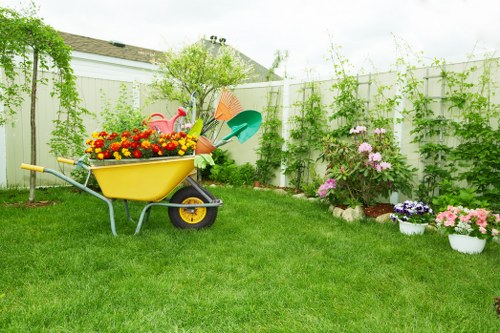 Sustainable rubbish gardening area practices mean we transform garden waste into local value: mulch for community planting, chipped wood for footpaths, and compost for allotments. We work closely with community gardens, school planting projects and urban greening initiatives to channel suitable materials directly into local reuse instead of sending them for disposal.
Our partnerships with charities and community organisations are a deliberate part of our service model. We collaborate with conservation and community groups such as local habitat restoration charities and civic reuse organisations to place usable timber, planters and soil improver where they benefit neighbourhood projects. These partnerships help close the loop, reducing waste and supporting social and environmental outcomes.
 To support transparency we track volumes diverted from landfill and publish internal summaries of performance against our 70% recycling target. Performance metrics include tonnes diverted to composting, cubic metres of wood reused as mulch, and the proportion of green waste delivered to authorised transfer stations versus disposal sites. We also use GPS-enabled route optimisation and regular vehicle maintenance to keep our emissions profile as low as possible. The result is a cutting and clearance service that cares for hedges and the wider environment.
Practical examples of recycling activity in the Willesden area include onsite chipping of small branches for mulch, separation of recyclable plastic ties and packaging for appropriate recycling streams, and directing larger timber to community projects that can reuse it. We avoid adding garden waste to mixed household bins wherever possible, aligning with the borough’s emphasis on separation at source. Source separation increases the quality of recycled outputs and reduces costs associated with contamination.
Our sustainable rubbish gardening area strategy extends to education for clients: simple advice on how to keep compostable materials separate, how to prepare branches for reuse, and how organic matter can benefit soil health. While we do the physical work, delivering a greener service to Willesden, we also encourage householders and local councils to adopt practices that support the circular management of garden waste.
In summary, our hedge trimming and garden clearance services in Willesden are built around measurable sustainability goals, practical reuse and recycling workflows, collaborative local partnerships with charities and transfer stations, and a low-carbon transport approach. By choosing responsible Willesden hedge care you support a local system that reduces landfill, powers community greening initiatives and helps the borough meet its wider environmental ambitions.